
Base 9500 Wil SG · Direct & overnight · all of Switzerland
Black VW Tiguan R on an alpine road at sunset for direct courier trips
VW Tiguan R · 320 PS4MOTION · discreet · direct
DIRECT COURIER · NO TRANSHIPMENT · MON–SUN
Swiss courier drivers.
No detours.
Even overnight.

x25pronto Switzerland carries approved goods shipments by car, van or Van XL personally and without unnecessary transhipment. Direct and overnight trips can be booked Monday to Sunday – subject to availability in the booking calendar.

Direct Mon–SunOvernight Mon–SunCar & van up to 1,000 kg
COURIER INSIGHTS

Pick lists and digital load plans for courier fleets

Digital pick lists and load plans speed up loading, reduce mistakes and improve space use in cars. Integration examples and PKW load-plan templates for couriers.

Quick answer

Digital pick lists and load plans cut loading time, reduce wrong deliveries and make better use of car space. By linking pick lists to routing and mobile apps, courier companies in Zürich, Lausanne and Lugano load faster, follow the best stop order and avoid mid-route reshuffles.

Why digital pick lists matter

Couriers operate on tight schedules. Paper lists cause mistakes, double checks and slow loading. Digital pick lists show which parcels go to which car zone. They link parcel data, recipient notes and drop rules. That cuts search time and misplacements.

How load plans reduce loading time

A load plan orders parcels by exit sequence, destination and size. For cars this means: heavy items low, light items on top; stops loaded from last to first; and visibility for quick exits. Drivers load faster, tours start on time and on-road rearranging drops.

Examples of software integrations

Common systems exchange data via API or CSV. Typical integrations: - TMS/dispatch: tour data flows into the pick list. - WMS: inventory and packing info for picking. - Mobile in-vehicle apps: show load plan with photos and QR checks. - Mapping and routing services: align load sequence with optimized route. In practice Swiss couriers link their dispatch tool to a load-plan app so drivers get step-by-step loading instructions on a tablet.

Template: simple PKW load plan

A compact car template should include: stop number, recipient, parcel ID, dimensions LxWxH, weight, load zone (e.g. rear left), stacking notes and photo/QR. Order by last stop first. Flag bulky or fragile items in red. This creates a clear loading picture for each driver.

Process: pick list to load in 6 steps

1) Export tour data. 2) Generate pick list with volume and weight estimates. 3) Auto-create load plan by stop order. 4) Driver app displays sequence, photos and QR checks. 5) Scan when loading. 6) Confirm with dispatch after loading. Each step removes manual checks.

Measurable benefits for Swiss operators

Immediate gains include shorter load times per tour, fewer wrong deliveries, better space use in cars and faster onboarding of drivers. For firms in Basel or St. Gallen this means more deliveries per day and lower operational friction.

Frequently asked questions

Do I need special hardware for digital load plans?

Not necessarily. Many solutions run on off-the-shelf tablets or smartphones. Barcode scanners or Bluetooth scanners help speed scans, but are optional.

How do I connect digital pick lists to my dispatch system?

Check if your dispatch system offers API or CSV exports. Most load-plan tools accept both. An IT specialist can set up a basic interface; often an automated export-import routine is enough.

How do I design a template for small car loads?

Keep required fields to stop number, parcel ID, dimensions/weight, load zone and stacking notes. Add a photo or QR field for quick checks. Use colors for fragile or urgent items.

Which KPIs should I track?

Track loading time per tour, wrong deliveries per 1,000 parcels, average space utilisation and time to first delivery. Compare these before and after rollout.

Plan a courier trip with easy steps

A courier trip should be easy to book. Enter the start and the end point. Then choose the day and time. Add a short note about the item. The route is checked. You then see the guide price. This helps you know if the trip fits your plan. Clear facts are enough for suitable goods and shipments. Long text is not needed. A full street address helps more. A name can help too. At the end, check all details once more. Then you can send the booking.

Direct from A to B On a direct trip, the item stays in the same assigned vehicle. The driver picks it up at the start. Then the driver goes to the end point. There is no parcel hub on the way. The item is not unnecessarily transferred to another vehicle. This can suit files, parts, samples, IT gear or keys. The trip uses the real road route. The time can change with the place and the traffic. The route is checked before you send the booking.

Overnight for the next day Not every item must arrive on the same day. Overnight is for a trip on the next day. The item is first picked up at the start. The trip to the end point is set for the next day. You can see the open times in the form. Pick a time that suits your plan. The start and end point must be clear. The type of item also matters. Before you finish, you can check all details again and fix an error.

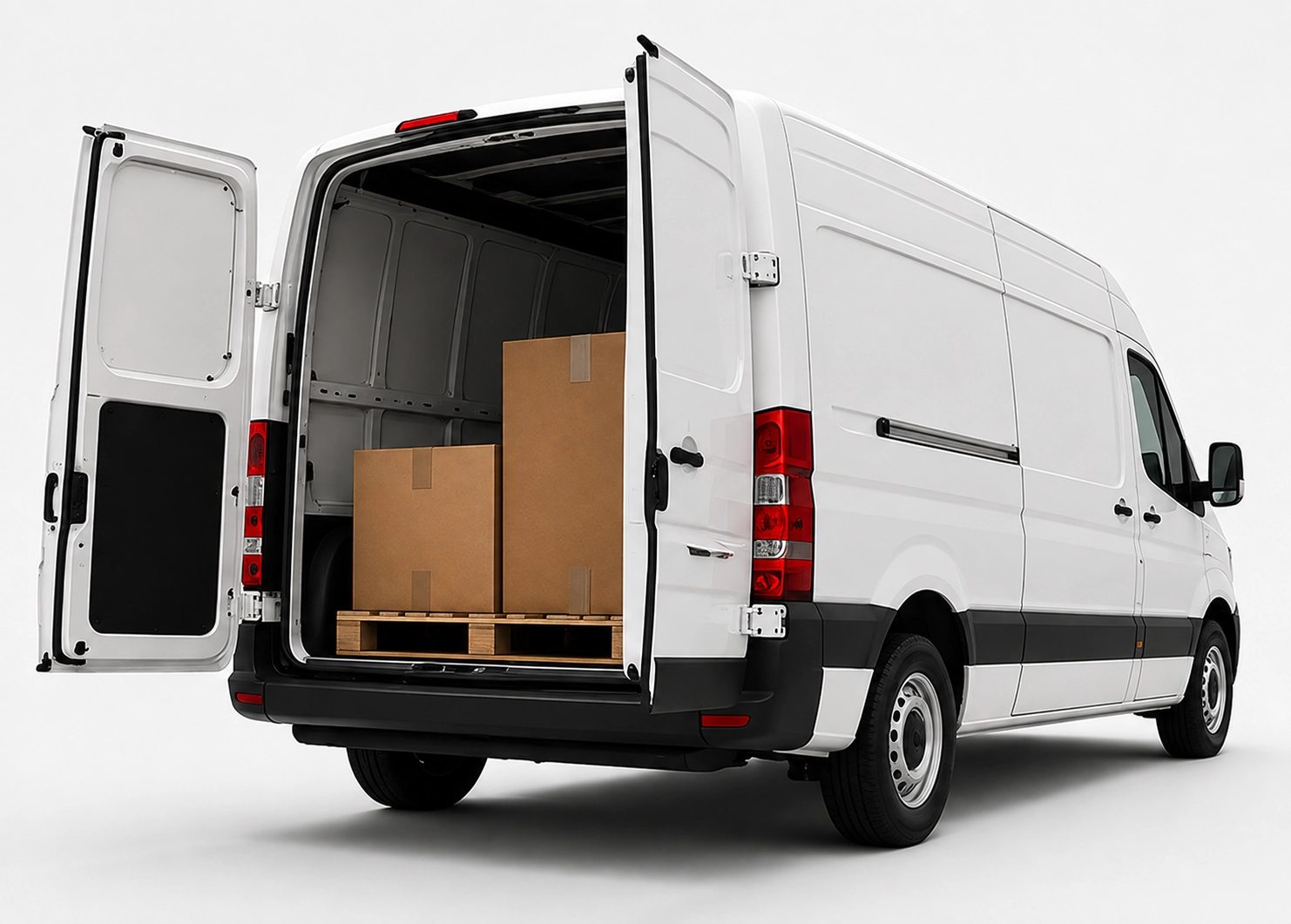
Suitable goods and vehicle choice Depending on weight, dimensions and loading needs, a car, van or Van XL is assigned. Documents, samples, parts and devices can fit, as can larger goods after review. The shipment must be securely packed and capable of being restrained. Weight, shape, loading path and vehicle capacity must match. Unclear cases are reviewed before assignment.

Pack the item well Pack the item before the driver comes. The pack should suit what is inside. Paper may need only light care. A device may need more care. Glass needs good cover from hits and force. Loose parts should stay firm in a box. The item should be easy to lift. The driver must be able to load it safely into the assigned vehicle. A good pack saves time. It also helps keep the item safe on the road.

Give the full start point The start needs a clear address. Enter the street and house number. Add the post code and town. A name on the door can help. For a firm, the firm name is useful too. If there is more than one door, add a short note. The same is true for a yard or a ramp. The item should be ready at the set time. The driver should not need to search for it. This helps the trip start on time.

Give the full end point The end point also needs clear facts. Enter the full address. Add the name of the person there if it helps. A short note can help at a large site. It can also help when a house has more than one door. A yard can be hard to see from the road. Then add one short line. The driver should find the place with ease. A post code alone is not enough. The real street route is used for the trip.

A name can help a lot A name can make the handover much easier. At the start, it may be the person with the item. At the end, it may be the person who takes it. For a firm, a team name can help as well. Keep the note short. A name and a place are often enough. If you need a meet point, state it in clear words. The driver should not have to guess. This saves time at sites with many people or firms.

The real road route counts The trip uses the real road route. A town name on its own is not enough. A post code is too broad as well. Two homes in the same town can be far apart. That is why the form needs both full points. The route is checked on the road map. This gives a better view of the trip. The road may cross a town, a hill or a lake area. Such things can change the trip. Both full addresses help with time and price.

See the guide price first You see a guide price before you send the booking. It comes from the trip details. The start and end point are part of it. The road route and time also count. The type of item can change the price too. So there is no one fixed price for a whole town. Two trips in one post code can still be different. A new street can change the route. Check the price in the form. Then decide if you want to book.

Choose a good time Pick a time that fits the real trip. A road trip takes time. Loading can take a few minutes too. The same is true at the end point. Heavy traffic can make the trip longer. For a direct trip, the first possible end time is based on the route. Some extra time is added. Overnight has its own open time slots. A closed time cannot be picked. This helps stop a plan that is too tight before the trip even starts.

Traffic can add time Each day can be different. Roads can be busy in the morning. They can be busy at night too. A queue can make the trip longer. Snow or rain can slow a vehicle down. Road work can also change the route. It is not always easy to know this far in advance. So it is wise to leave some spare time. The route in the form is the base. Real road use can change after that. A good plan leaves some room.

Have the item ready The item should be ready when the driver arrives. Put it in a place that is easy to reach. The driver should not have to search through a large site. At a firm, the front desk may help. At a home, a name on the door may be enough. Add a short note if the door is hard to find. Keep the path clear. The item can then go into the assigned vehicle quickly. This makes the start short and helps the rest of the trip.

Plan the handover At the end point, it should be clear where the item goes. Add a name if needed. A meet point can help too. This is useful at a large house or site. If many firms share one place, a name is very helpful. The driver takes the item to the agreed point. The trip ends after the handover. Clear details save time there. They also help when the right door is not easy to see. Check the end note before you send the booking.

Check before you book At the end of the form, you see the key facts in one view. Check the start first. Then check the end point. Look at the day and time. Read the note about the item. Names and short notes should be right. If a fact is wrong, go back. Change it and check the page again. Send the booking only when all facts are right. This gives the driver a clear job and makes the trip easier for all sides.

Useful for firms A firm may have many small items to send. It may be a file. It may also be a part, a sample or a small device. Some items must go out on the same day. Others can go on the next day. A courier trip can suit both cases. Enter the start, end point and time. Then add a short note about the item. The route is checked. This lets a firm plan the job online without a long email or many extra steps.

Useful for private trips A courier can also help with a private trip. You may need to send a key to a person. A small part may need to reach a place fast. A letter can be urgent too. The steps are the same as for a firm. Enter the route. Choose the time. Then add a short note about the item. Check all facts before you finish. If the item fits the service, you can book the trip online. The route is clear from the start.

From one town to the next The local page shows where the service can be used. The town can be the start. It can also be the end point. A trip can go to a new canton. It can also come from one. The town name alone does not set the price. The route from door to door is what matters. That is why you need to enter both full addresses. The form checks the route. It also shows the open time and the guide price for the trip you chose.

If the plan changes A plan can change after a booking. You may need a new time. The start or end point may change. The item may change too. Send new facts as soon as you can. A new end point can change the route. A new start can do the same. The price may then change too. The sooner the new facts are known, the easier they are to check. This gives more time to find a clear way to handle the trip before it starts.

Clear words are enough A good trip does not need a long note. Short facts are often best. Give the start and end point. Give the day and time. Say what the item is in a few words. Add a note only when it helps. A name may be useful. A door may be useful. A meet point may be useful. More text is often not needed. The form takes you through each field. You can see fast what is still missing.

Step by step Start with the route. Then choose the time. Add the item next. Check the guide price. Read all facts one more time. If a fact is missing, add it. If a fact is wrong, fix it. When all details are right, you can send the booking. The steps stay the same on each local page. You do not need to learn a new form for each town. Clear steps save time and show you what comes next.

Keep the item in one pack The item should stay in the same pack from start to end. Put small loose parts in a firm box. Close the box well. Loose parts can move in the vehicle. A bag may be fine for a light item if it closes well. A folder can work for files. A hard case is better for some gear. The driver should be able to lift the pack with care. This helps the item reach the end point in the same state.

Be easy to reach at the start It helps if someone at the start can be reached for a short time. The driver can then clear up a small question fast. This can matter at a large site. A gate or bar can make the start hard to reach. One short note may save a lot of time. Add only facts that help with the trip. The job stays clear that way. The driver knows where to go and who will hand over the item.

Have someone ready at the end Plan for a person at the end when a direct handover is needed. That person should be there near the set time. At a firm, the front desk may be able to take the item. At a home, a set meet point can help. If no one is there, the handover may take more time. Clear facts help avoid this. A name, a door and a short place note are often enough. This lets the driver finish the last part of the trip with less delay.

Choose the trip type that fits Not every job needs the same type of trip. If the item should go straight to the end point, a direct trip may fit. If it can arrive on the next day, Overnight may fit. Look at the day and time first. Then check the route. After that, see the guide price. This helps you choose the type that fits your plan. You do not need to guess. The open times in the form show what can be booked for your trip.